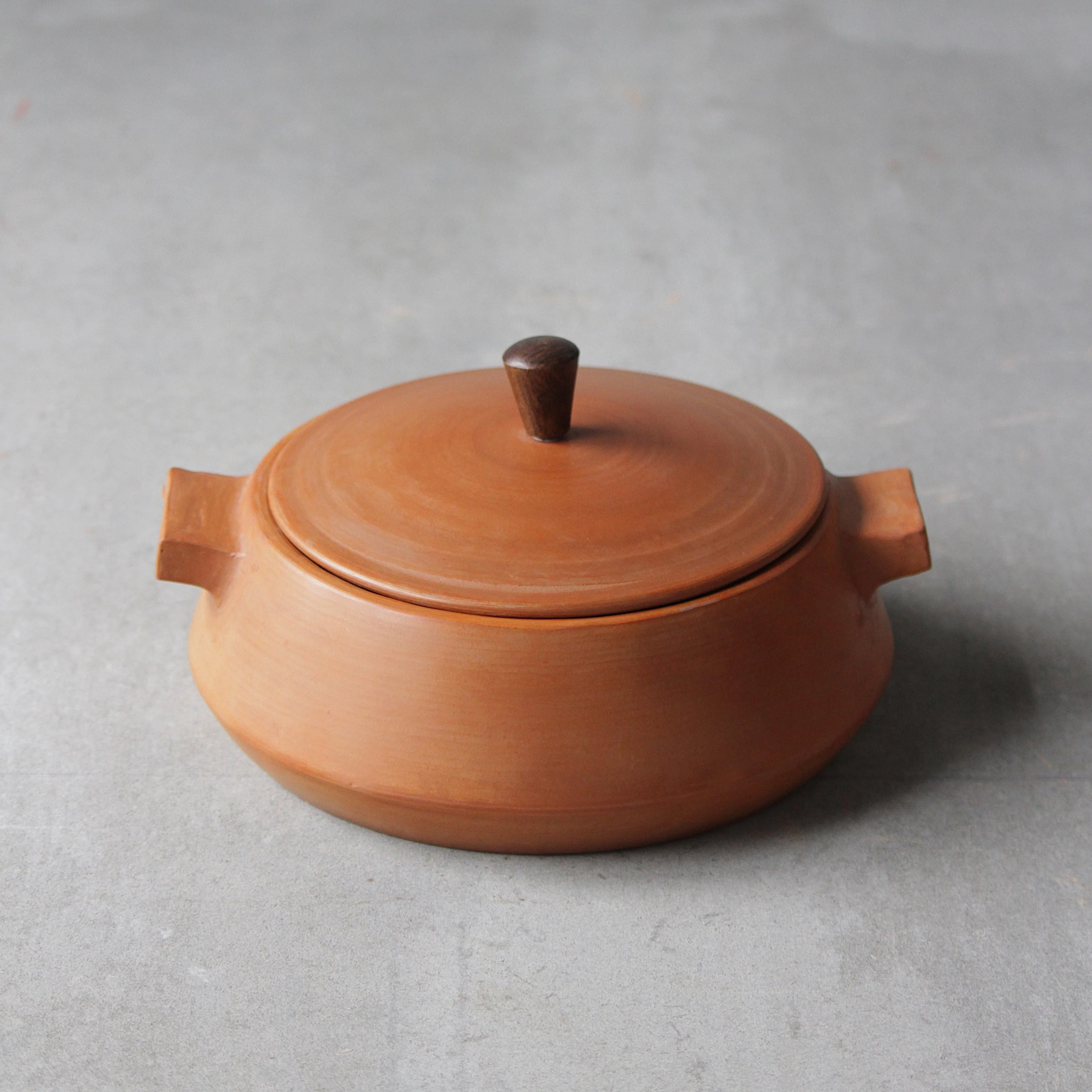

EcoDecor Regal Crucible
At one point in time, turquoise was considered a hue for the regal. It is noted that in civilizations especially Egyptian and Mayan, the imperial class had vessels especially painted so. The fissures in the design denote the decay caused to them after centuries of this unravelling mystery.
Features -
*Crafted from Processed Plant Starch, an agro-waste–based, non-toxic, biodegradable material.
*Designed as a sustainable alternative to ceramic, glass, resin, wood, and metal décor.
*Energy-conservative manufacturing that avoids kiln firing, metal melting, resin curing, and glass molding—resulting in significantly lower embodied energy from cradle to gate.
*Produces negligible air emissions (PM₂.₅/PM₁₀, NOₓ, SO₂, VOCs) due to non-combustion and non-chemical curing processes.
*Generates minimal raw-material waste, contributing to a cleaner, low-impact production cycle.
*Every piece is designed in-house and hand-finished, offering artisanal detail and modern Indian design expression.
*Inspired by biophilic forms and natural textures to promote nature-centric living.
*Proudly Made in India, supporting both Make in India and Design in India.
*For wood-finish products, no trees are cut—all wood aesthetics are material-based, not timber-derived.
*Does not contribute to landfill toxicity, unlike ceramic glazes, resins, metals with coatings, or synthetic composites.
Carbon Footprint: 2.1237 kg CO₂e
Product Information
Product Information
Shipping & Returns
Shipping & Returns
Description
At one point in time, turquoise was considered a hue for the regal. It is noted that in civilizations especially Egyptian and Mayan, the imperial class had vessels especially painted so. The fissures in the design denote the decay caused to them after centuries of this unravelling mystery.
Features -
*Crafted from Processed Plant Starch, an agro-waste–based, non-toxic, biodegradable material.
*Designed as a sustainable alternative to ceramic, glass, resin, wood, and metal décor.
*Energy-conservative manufacturing that avoids kiln firing, metal melting, resin curing, and glass molding—resulting in significantly lower embodied energy from cradle to gate.
*Produces negligible air emissions (PM₂.₅/PM₁₀, NOₓ, SO₂, VOCs) due to non-combustion and non-chemical curing processes.
*Generates minimal raw-material waste, contributing to a cleaner, low-impact production cycle.
*Every piece is designed in-house and hand-finished, offering artisanal detail and modern Indian design expression.
*Inspired by biophilic forms and natural textures to promote nature-centric living.
*Proudly Made in India, supporting both Make in India and Design in India.
*For wood-finish products, no trees are cut—all wood aesthetics are material-based, not timber-derived.
*Does not contribute to landfill toxicity, unlike ceramic glazes, resins, metals with coatings, or synthetic composites.
Carbon Footprint: 2.1237 kg CO₂e